
Art Basel Miami x Untitled Art Fair x H&C Collective
photo by world red eye
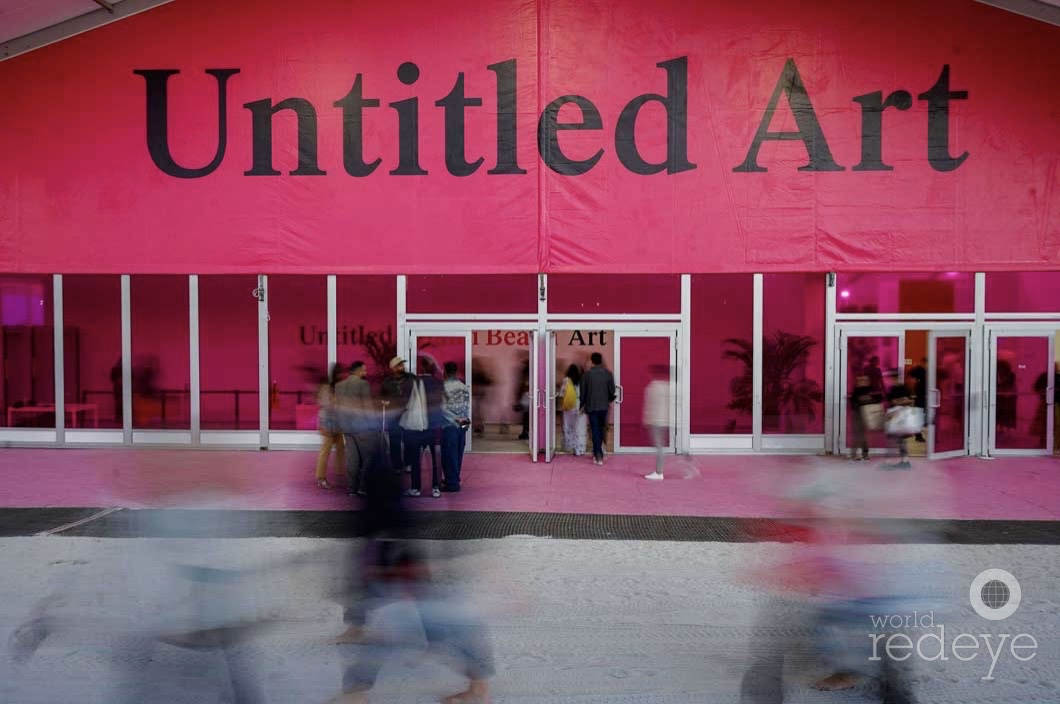
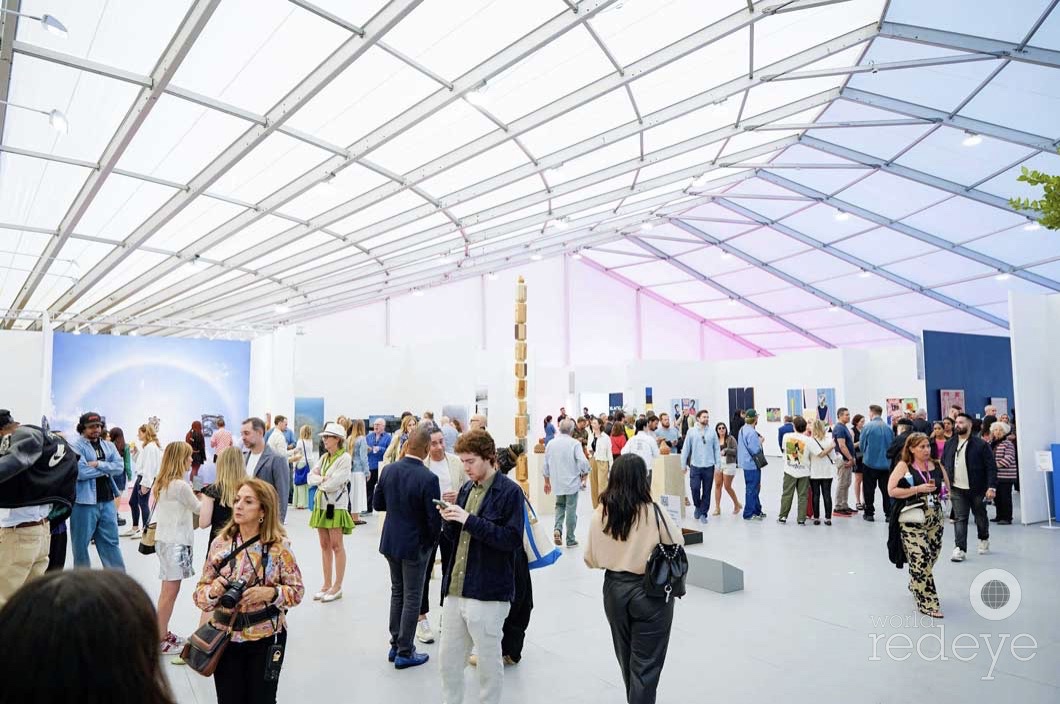
Every year during Miami Art Week, a cultural moment arrives on Miami Beach that requires more than curation and design. Untitled Art Fair draws 55,000 attendees across seven days. It hosts 220+ international exhibitors. It operates a network of bars, cafés, lounges, and brand activations across a temporary beachfront structure built entirely on sand.
What happens when that structure closes? Everything gets loaded onto trucks—the kitchens, the refrigeration, the service infrastructure. The canvas returns to sand. But for those seven days, Untitled becomes a functioning hospitality ecosystem. And that ecosystem is powered by operations.
This is the story of what it takes to run food and beverage at scale on a destination event, and why art fairs at this caliber need operational partners, not just caterers.
photo by world red eye
Why Untitled Matters: A Partnership Case Study
H&C Collective has partnered with Untitled Art since 2019. That’s seven years of understanding the fair’s rhythm. When crowds surge, where guests gather, what exhibitors need, what VIPs expect. The partnership has grown from catering support into a comprehensive hospitality role spanning:
- Full food and beverage program design
- Temporary kitchen infrastructure built and operated on sand
- 3 operational kitchens managing multiple service points
- 3 VIP lounges with elevated hospitality
- Café and coffee service (Pineapple Express Café)
- 12+ bars programmed across the fair
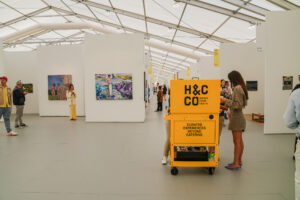
- 3 roaming carts for high-traffic zones
- Brand partner activations and sponsor hospitality
- Exhibitor meal support for 220+ vendors working 7-day shifts
- 250+ staff coordinated across build, service, daily resets, and breakdown
The scale grew because the partnership proved something: catering isn’t an add-on. At events of this magnitude, food and beverage is infrastructure. It affects how long guests stay, how exhibitors function, how sponsors show up, and whether the fair operates smoothly across multiple days.
The Public Experience: Keeping 55,000 People Moving
Fairgoers at Untitled aren’t captive to a single dining format. They’re moving between exhibitor booths, VIP conversations, and environmental moments. The food and beverage program had to support that flow.
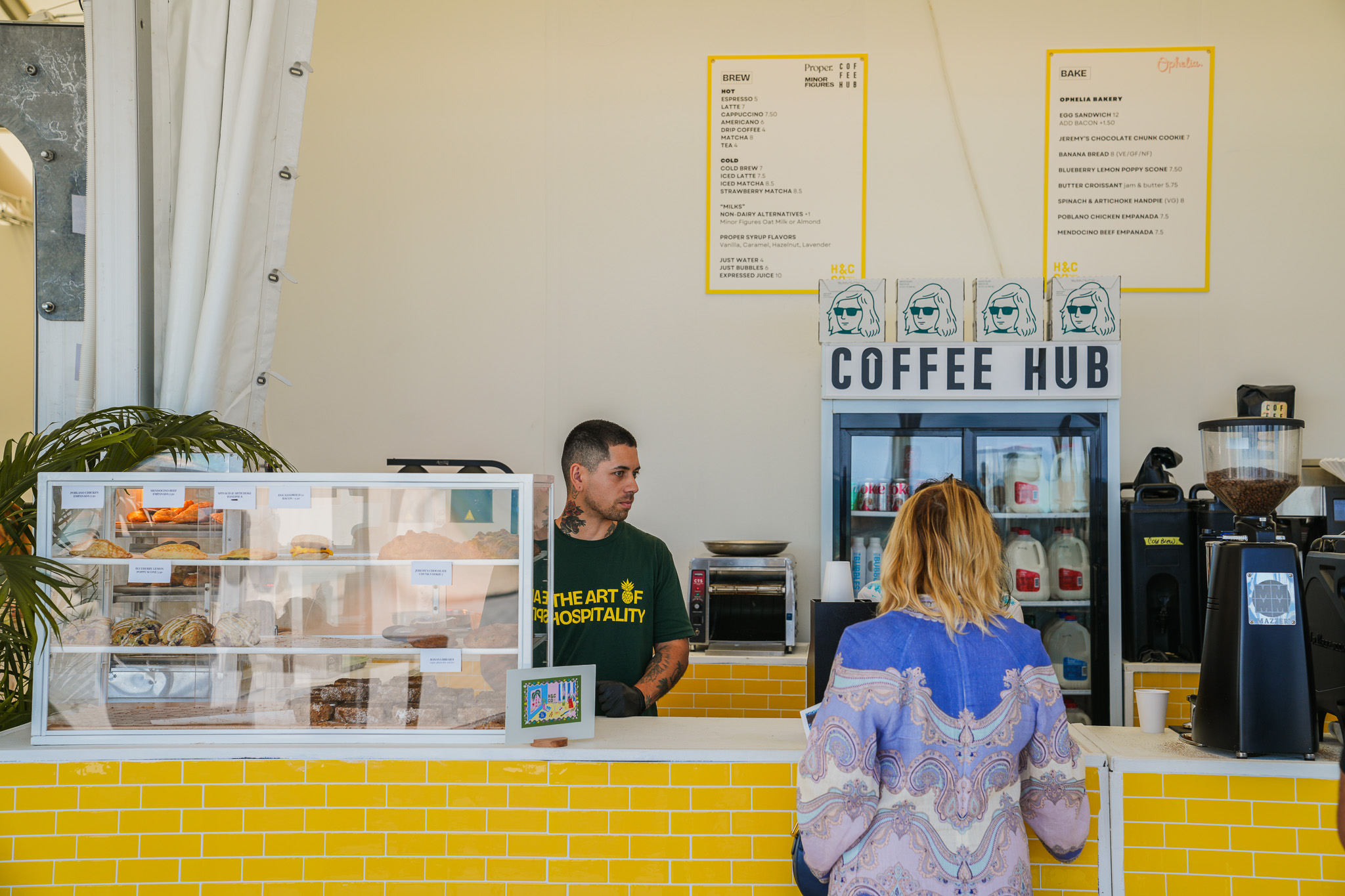
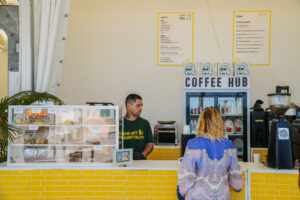
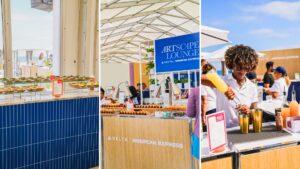
The Pineapple Express Café became a neighborhood landmark. A bright service point that served coffee, pastries, and grab-and-go items without forcing guests into a sit-down rhythm. Coffee service through local partner Coffee Hub provided quality and locality. Roaming carts positioned at high-traffic intersections extended service beyond fixed points. Multiple bars distributed across the fair prevented bottlenecks and kept the energy decentralized.
The operational truth: serving 55,000 people isn’t about building one large kitchen. It’s about distributing service points, managing inventory flow, and resetting stations throughout the day so guests always see fresh offerings.
Exhibitor Support: Feeding the People Doing the Work
Exhibitor hospitality is invisible to casual fairgoers but critical to the event’s success. Exhibitors work long shifts inside the fair, sometimes 10-12 hours a day for seven straight days. They can’t leave for extended breaks. They need reliable access to food and beverage without abandoning their booth for extended periods.
This is often overlooked in event planning. Exhibitors are working guests. Their satisfaction directly impacts how engaged they are with collectors, press, and fellow artists. Well-fed and hydrated exhibitors show differently.
VIP Hospitality: Three Lounges, Three Different Experiences
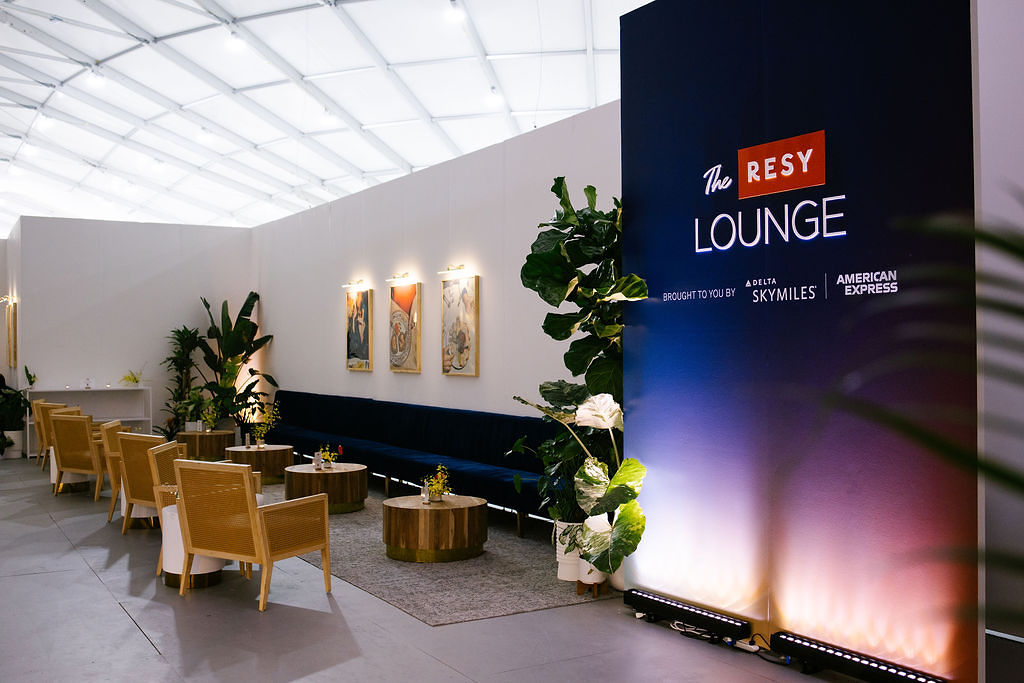
Untitled hosts multiple VIP audiences: collectors, sponsors, press, artists, and partners. These aren’t casual fairgoers. They expect a different pace, presentation, and service level.
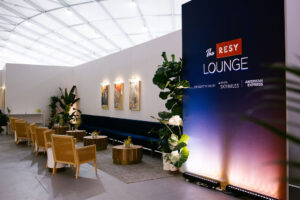
H&C operated three distinct VIP lounges, each calibrated to its audience:
- Elevated presentation and curated food moments
- Pacing designed for conversation and leisure (not fast turnover)
- Service standards that feel seamless and attentive
- Beverage programming aligned to lounge identity and brand partnership
The infrastructure challenge: maintaining high-touch hospitality across three separate environments, with staffing consistency, while the rest of the fair operates at high volume. This requires a hospitality team that understands the difference between efficient service and gracious service.
Brand Activations: Where Sponsorship Becomes Experience
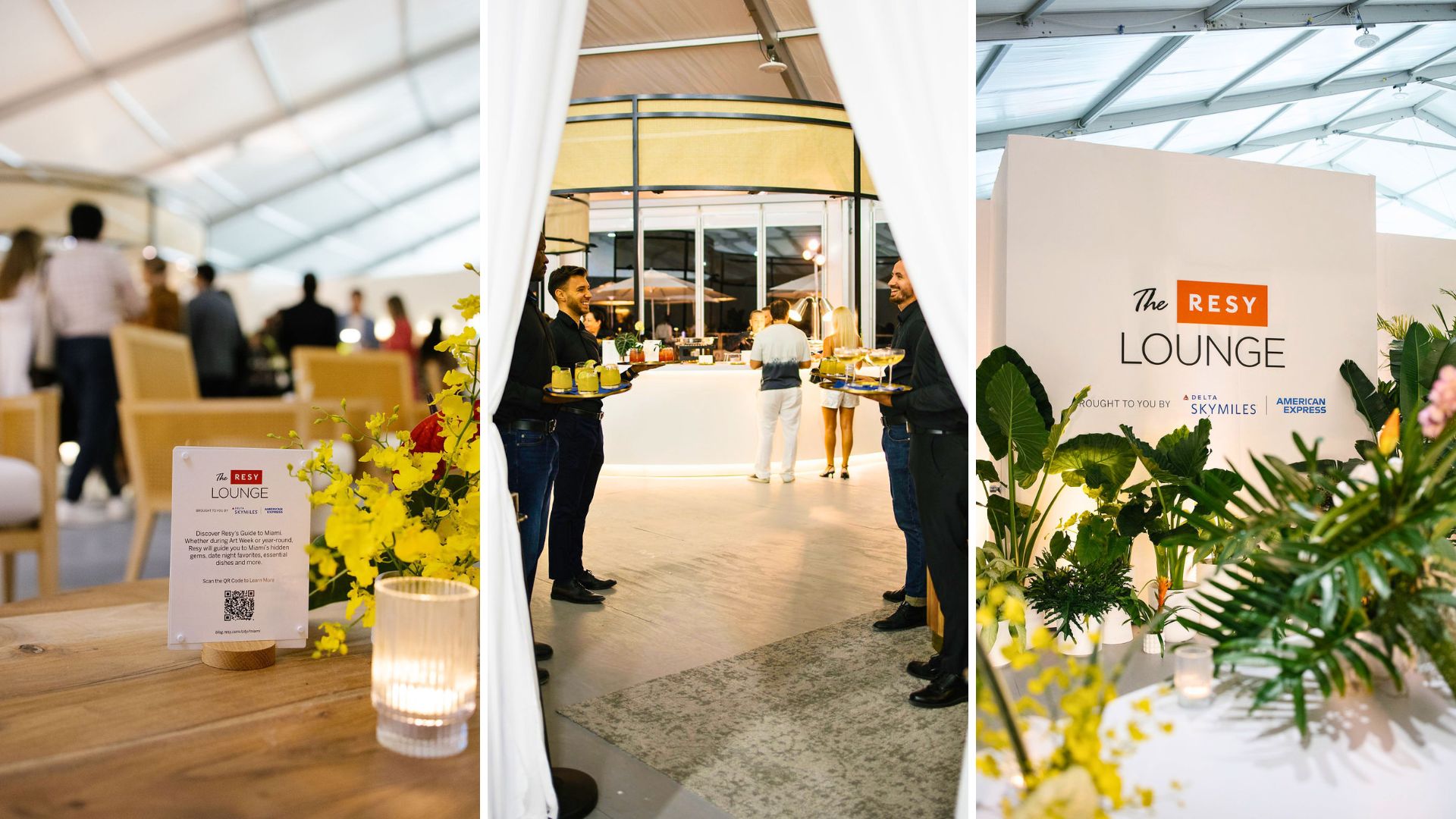
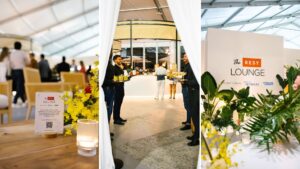
Over the years, Untitled has hosted brand partners ranging from luxury hospitality brands to spirit companies. Each brought different hospitality ambitions: American Express, Resy, Delta, RADO, LALO Tequila, Pommery Champagne, Condesa Gin. Each needed a different level of food and beverage support.
A sponsor’s hospitality moment is both a branded space and a translated brand experience. H&C’s role was to understand what each sponsor wanted to communicate and build the food, beverage, and service experience around that goal.
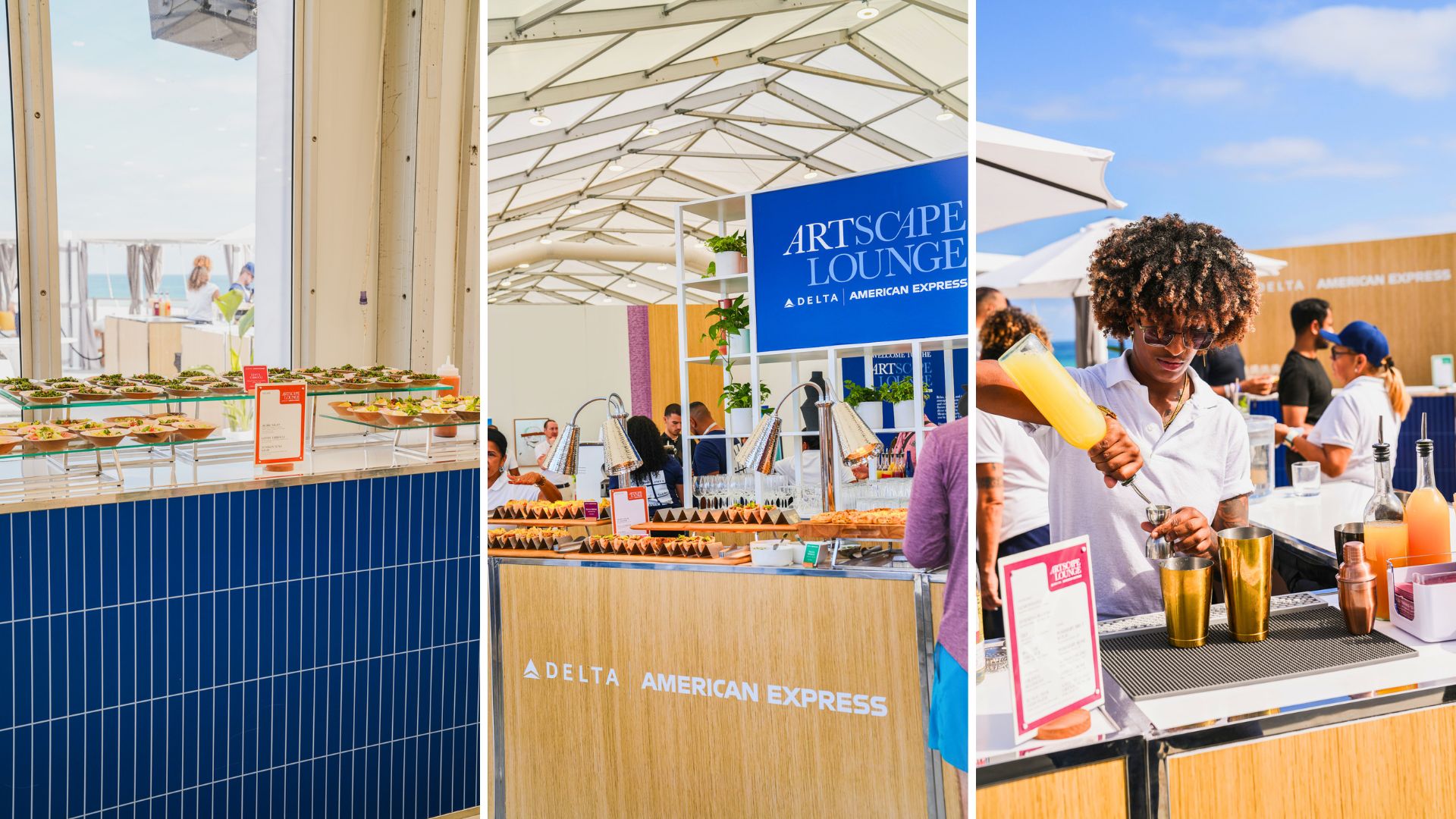
One standout example: the Delta Air Lines x American Express Artscape Lounge featured chef-driven hospitality with renowned chef Michael Solomonov. H&C handled chef execution, commissary access, ingredient sourcing, staffing, curated cocktail programming, and the full hospitality service. Supporting a celebrity chef inside a temporary, high-profile environment on a beach requires operational sophistication most caterers don’t possess.
These moments prove a crucial point: brands don’t hire caterers to serve food. They hire operational partners who can translate their vision into a flawless guest experience.
The Operational Backbone: Building Kitchens on Sand
This is where the story becomes unglamorous and absolutely essential. Untitled’s food and beverage program runs on three full kitchens built from the ground up on sand. Not kitchens inside buildings. Kitchens built on sand, with temporary infrastructure that handles:
- Refrigeration and cold storage for 55,000 attendees across 7 days
- Power coordination for multiple kitchen zones
- Water access for cleaning, cooking, and beverage service
- Equipment staging, delivery, and positioning
- Product receiving, inventory tracking, and replenishment
- Daily prep for multiple service formats
- Daily resets and service area turnover
- Load-in and load-out of thousands of pieces of equipment
- Waste management and sanitation protocols
- Heat, humidity, and weather contingencies specific to Miami and beachfront conditions
The complexity multiplies across the fair:
- 12+ bars distributed across the fair, each requiring spirits inventory, ice supply, glassware, and restocking logistics
- Multiple service points (café, carts, VIP lounges, exhibitor support) creating a network effect: if one breaks down, others absorb the load
- 250+ staff requiring coordination across multiple departments, shift timing, meal breaks, hydration protocols, and operational clarity
- Daily resets turning service areas that served thousands in one cycle back to fresh presentation for the next
- Weather contingency every single day—Miami’s afternoon rain is not a surprise; it’s a known risk that requires umbrellas, ponchos, equipment covers, and protected service access
Large-scale events fail not because the vision is wrong, but because the infrastructure breaks down. A kitchen tent in the wrong location becomes a choke point. Bars too far from storage create service delays. Insufficient shade for staff in Miami heat leads to rushed, poor service. Inadequate rain protection means equipment and inventory exposed mid-service.
Local knowledge matters. Miami off-premise catering isn’t generic. It’s knowing which venues require extra cooling and bug management for staff. It’s knowing not to drive a heavy vehicle onto sand without preparation. It’s knowing that a private residence may mean cooking a high-end dinner from a garage. It’s knowing that if every weather app says rain, umbrellas and ponchos need to be on the truck before the event starts.
Why It Worked: Hospitality as Infrastructure
Untitled Art Fair works because food and beverage was treated as infrastructure from the beginning, not as decoration at the end. When catering is brought into the conversation early—before layouts are locked, before tenting and rentals are finalized—the entire event benefits. BOH planning informs design. Service flow informs guest flow. Staffing needs inform timeline. Equipment access shapes venue choice.
By the time Untitled opened its doors each year, three kitchens were already humming. Bars were staffed. Staff zones had shade, water, and rest areas. Service paths were clear. Exhibitors knew where to find meals. VIP guests experienced seamless hospitality. Brand partners had the platform they needed.
The fair’s success wasn’t despite the operational complexity. It was because the operational complexity was solved before guests arrived.
What This Means for Art Basel 2026
Miami’s next global moment is Art Basel 2026. Brands, agencies, and event organizers are beginning to plan major activations, VIP programs, and hospitality experiences around the event.
Here’s what the Untitled story teaches: large-scale activations require operational partners who have done this before at this scale in this city. When you’re planning an Art Basel experience, your decision isn’t between caterers. It’s between partners who understand that:
- Temporary infrastructure on Miami Beach requires specific expertise
- Food and beverage isn’t an add-on; it’s the backbone of guest experience
- Supporting thousands of people requires real systems
- VIP hospitality and high-volume service can coexist within the same event
- Early collaboration prevents expensive problems
- Local experience prevents avoidable disasters
Ready to Build Your 2026 Activation?
Planning an Art Basel 2026 activation or major hospitality program in Miami? The questions you should ask aren’t about menus. They’re about infrastructure: Do they understand Miami? Have they built temporary systems at scale? Can they operate both high-volume service and high-touch hospitality? Can they support your vision and solve the operational complexity behind it?
We’ve built three kitchens on sand. We’ve fed 55,000 people across seven days. We’ve supported 220+ exhibitors, multiple VIP lounges, celebrity chefs, and brand partners simultaneously. We know Miami’s weather, access challenges, permit requirements, and the unglamorous details that make flawless events possible.
Let’s talk about what’s possible for 2026. Let’s Discuss Your Art Basel Activation!